Labels

(undated) (91) 1 (9) 10 (7) 102 (1) 1066 (1) 1099 (2) 10th Century (1) 11 (3) 1100 (1) 11th (1) 11th of June (1) 12 hours (3) 1200 (1) 1202 (1) 1213 (1) 1241 (1) 1252 (1) 1294 (1) 13 (1) 13th century (1) 140 (3) 1464 (1) 14th Century (2) 14th of February (1) 15 (1) 1515 (1) 1536 (1) 1568 (1) 1570 (2) 1580 (1) 1597 (1) 15th Century (3) 16 (4) 1600 (1) 1625 (1) 1626 (1) 1627 (1) 1631 (1) 1638 (1) 1639 (1) 1640 (2) 1642 (2) 1647 (2) 1650 (1) 1657 (1) 1665 (1) 1691 (1) 1698 (1) 16th century (5) 17 (1) 1700 (1) 1701 (1) 1704 (1) 1717 (1) 1737 (1) 1746 (2) 1748 (1) 1749 (1) 1751 (1) 1758 (1) 1768 (74) 1776 (1) 1778 (1) 1792 (1) 1795 (1) 1796 (1) 17th centuary (6) 18 (2) 1801 (1) 1803 (1) 1810 (1) 1811 (2) 1813 (14) 1815 (1) 1817 (1) 1818 (8) 1820 (1) 1824 (1) 1830 (2) 1835 (1) 1838 (2) 1842 (1) 1844 (1) 1848 (2) 1850 (10) 1851 (1) 1858 (1) 1859 (1) 1862 (1) 1864 (1) 1869 (1) 1870 (1) 1873 (2) 1880's (1) 1884 (2) 1888a (5) 1890 (2) 1891 (1) 1892 (1) 1893 (82) 1895 (61) 1896 (1) 1898 (1) 1899 (6) 18th century (2) 19 (3) 1900 (290) 1903 (293) 1921 (62) 1955 (1) 1970's (1) 1990's (1) 19th century (3) 1st of August (2) 1st of May (11) 2 (24) 20th century (1) 21 (1) 24th (2) 26 (2) 28 (2) 2nd of August (1) 3 (56) 30 (1) 3rd century (1) 4 (10) 40 (2) 490 (3) 4th century (1) 5 (7) 6 (8) 6th century (2) 7 (19) 70 (1) 705 (1) 706 (1) 727 (1) 799 bc (1) 8 (2) 800 (1) 844bc (1) 8th of May (1) 9 (17) 979 (1) 99 (1) 9th Century (1) Abbey (13) Abbot (2) Abbot John (1) Abbot's Way (2) Abel (1) Abracadabara (1) Absent ones (1) abundance (2) accident (2) accounts (1) acre (1) adder (2) adit (1) adoption (1) adultary (2) Aegean (1) Aeneas (1) age (1) air (9) air-bladder (1) Alarazion (1) Albion (1) Alef (1) Alford (1) Alford Well (1) All-fools Day (1) All-Hallows (4) All-Saints (3) Almondsbury (1) alms (2) almshouse (1) altar (6) Altarnum (1) alter (2) Alternon (1) Ambrose (2) Ambroses Well (1) Amesbury (1) amonite (1) amulet (7) An Marogeth Arvowed (1) Anchor Stone (1) anchorite (1) Angels (7) anger (1) animal (4) Annie Jefferies (3) anti-clockwise (2) antler (1) Ants (4) Ape (1) aphorism (1) Aple-drones (1) apocolipse (1) apostle (2) apple (13) Appledore (1) apples (1) apprentice (1) april (11) apron (1) arbour (1) Arch-druid (1) Archaeologia Britanica (1) Archaeology (3) archway (1) argue. (1) Aries (1) arm (5) Armed Knight (2) arms (2) army (2) Around the World (1) artist (1) Asburton (1) Ascension day (2) ash (14) Ash Wednesday (1) Ashburton (3) Ashcombe (1) Ashen Faggot (5) ashes (4) Ashill (1) Ashton Faggot (2) Asparagus Island (1) ass (2) assasin (1) aster (1) Asthma (1) Astrologer (2) Athelstane (5) Atlantic (3) atmosphere (1) attic (1) auction (2) auctioneer (1) August (7) Augustus Smith (1) Aunt Alcely (1) Aunt Nancy (1) Aunt Prudance (5) Australia (1) Austria (1) autumn (3) Avalon (2) averice (1) aversion (1) Awesewell Rock (1) axe (2) axle (3) Axwaddle (1) Baal (1) baby (18) Bachelor (1) back (1) back pain (1) backwards (3) Bacon (1) badger (1) Badgworthy Water (1) Badgworthy Wood (1) bag (10) bagpipe (1) bailiff (1) baking (4) Bal Lane (1) balance (1) baliff (1) ball (5) ballad (6) balm (1) Balnoon (1) balsam (1) Bampfyde Moore Carew (2) Bampton (1) Bampton Street (1) band (2) bandit (1) banishment (1) baptism (12) Barbara Allan (2) bard (3) Bareppa (1) bargain (1) Baring-Gould (5) Barius (2) bark (1) Barker (1) Barle (3) Barley (5) barn (5) Barngun (1) Barnstaple (6) Barnstaple Fair (3) Baron (4) barrel (2) Barricane Creek (1) Barum (2) Basil's Well cross (1) basin (12) basket (2) bastard (2) Bath (8) Bath Cathedral (1) bathe (3) batle (2) battle (21) battlements (1) Batty (1) Bawdrip Rectory (1) bay tree (1) Bayeux (1) beach (1) beacon (1) bean (3) Bear (1) Bear Baiting (1) Beardown (2) Beardown Man (1) Beast of Bodmin (1) beating (4) beating the bounds (2) beautiful (17) beaux (1) Becka Falls (1) Becky Falls (1) bed (13) bedridden (1) bedroom (2) beech (4) beef (4) beer (16) Beersheba (1) bees (9) beetle (2) Beetor Cross (1) beggar (4) Beir (1) Bel Tor (2) belfry (3) Belial (1) bell (24) bell-rope (2) Bellerian (2) bellows (1) Bellows Rock (1) Belstone (7) Belstone Tor (1) belt (1) Beltaine (1) bench (1) Benedictine (1) Benjamin Gayer (1) Benji (2) Benson (1) bent (1) Bere (1) Berry Pomeroy (3) Bertram (1) bestiary (2) Bethlehem (2) betray (2) Betsy Grimbal's Tower (1) Betty (3) Betty Stogs (4) Betty Trenance (2) Bible (5) Bickford (1) Bickleigh (3) Bickleigh Bridge (1) Bickleigh Court (1) Bickleigh Hill (1) bicycle (2) Bideford (1) Bill Hagland (1) Billy Frost (1) Binjie Geare (2) birds (15) birth (4) Bishop (11) Bishop Braningham (1) Bishop Grandisson (3) Bishop Hall (1) Bishop Odo (1) Bishop of Worcester (1) Bishop Oliver King (1) Bishop's Stone (1) Bisley (1) bittern (1) black (32) Black Hunter (1) Black Rock (2) Blackabrook (2) blackbird (1) Blackmail (1) Blacks Guide to Devonshire (3) blacksmith (1) blackthorn (4) Blackwood's Edinburgh Magazine (3) Blackwood's Edingburgh Magazine (6) Blandford Forum (4) blasphomy (1) blessing (9) blind (7) blindfold (2) blood (18) Blood Well (1) Bloody Corner (2) blue (5) bluebell (1) Blundell's school (2) Blunderbus (8) boar (1) boat (33) bob (1) bob-buttons (1) bobbin (1) Bockles (2) Bodelan (2) Bodmin (10) Boduc (1) body (1) boggart (1) bogs (6) Bolerium (2) Bolleit (1) Bolster (6) Bolt Head (1) Bolt Tail (1) bones (15) boneshave (1) Bonfire Night (2) book (9) boot (12) Bosavern (1) Boscawen Un (1) Bosfrancan (1) Boskednan (1) Bosperis (1) Bosporthennis (1) Bosprenis (2) Bosprenis croft (1) Botallack (1) bottle (1) Bottomless (7) boudica (1) Bougiehere (1) boussening (3) Bovey Coal (1) Bovey Heath (1) Bovey Tracey (6) Bow and arrow (4) Bowerman's Nose (4) Bowling (6) box (3) boy (15) bracelet (1) bracken (1) Braganus (1) bramble (5) branch (1) Brand (14) brandy (2) brass (4) Brass Well (1) Bratton Town (1) Braunton (2) Braunton Burrows (1) Bray (8) Brea Vean (1) Bread (15) Breage (2) break (1) breakfast (5) Bream (1) breast (6) Brecan (1) Brecknock (1) Brendon (2) Brent Tor (1) Breton (3) brewer (4) brewing (2) briar (2) bribe (1) brick (1) Brickhouse (1) bride (4) bridecake (1) bridegroom (2) bridge (2) Bridge Hill (1) Bridport (1) brine (1) Bristol (9) Bristol Channel (1) Bristolian (1) Britain (1) British Channel (2) Britons (2) Brittany (1) Broadwinsor (1) broom (5) broth (1) Brotherhood of the Rose (1) Brown Willy (1) Browney (5) bruise (1) brunnion (1) Brushford (1) Brutus (5) Brutus Stone (1) Bryher (1) bubble (2) Buccas (4) Buckfast (1) Buckfast Abbey (1) Buckland (1) Buckland Abbey (2) Buckland Wood (1) Buckland-on-the-Moor (1) buckle (2) buckler (1) Bucland Monochorum (1) Budock (1) Budocus (1) build (2) builder (2) buisness (1) Bull baiting (1) Bull's Hole (1) bullock (2) Bully Well (1) burgle (1) burial (3) Burian (1) burn (1) Burrian (1) Burrow (6) Buryan (3) bush (1) busy (1) Butewit (1) butler (3) butter (5) Buttercup (1) button (1) Button Hill (1) Byrdport (1) cabbage (1) Cadbury (1) Caer Esk (1) Cairn Gaiva (3) Cairns (6) cake (7) called up (1) Callington (1) Cam Boscawen (2) Cam Brea (1) Camelford (2) Camlan (1) camphor (1) canal (1) Cancer (1) candle (9) Candlemas Day (4) candlestick (2) cane (1) canibalism (1) cannon (1) Cannon Farm (2) cap (1) capon (1) Captain Davies (1) Caraclowse in Cowse (1) Caratacus (1) Cardinham (1) Careg cowse in clowse (1) Carew (2) cariboo (1) Carn Brea (5) Carn Brea Castle (1) Carn Liskez (1) Carne Bury-anacht (1) Carne-an-peul (1) carniverous plant (1) Carnyorth (1) carriage (1) cart (5) Carter (1) carve (6) carving (1) Cassiterides (2) Castele-an-Dinas (1) castle (40) Castle Denis (1) Castle Horneck (1) Castle Lesgudzhek (1) Castle of the Bloody Feild (2) Castle Rock (2) Castor (1) Cat (14) Cat-latin (1) catastrophe (2) Catchem (1) Cathedral (5) catholic (3) cauldron (1) cauliflower (1) Cavaliers (3) cave (18) Cawsand Beacon (2) celandine (1) celebacy (1) Cellars (2) Celts (11) ceremony (2) Cerne (2) cervical tuberculous lymphadenopathy (2) chad (1) Chagford (17) chain (3) chair (7) chalice (1) Chalice Well (1) chalybeate spring (2) Chambers (6) chance (1) Changeling (6) changelings (1) chant (1) Chapel (2) Chapel Comb (1) Chapel Farm (2) Chapel Hill (2) Chapel Idne (1) Chapel Porth (4) Chapel-Uny (2) chaple (13) Charcoal Burner (1) charity (2) charms (58) chase (1) chastity (2) Chedsey (2) cheese (4) Cheesewring (1) cheif (2) Cheney Downs (1) Cheriton (1) Cherry (13) Cherrybridge (1) Cheshire (1) Chest (4) Chester (1) Cheverel (1) Chevy Chase (1) Chew Magna (1) Chew Stoke (1) Chew Vally Lake (1) chicken (7) Chickpeas (1) chief (1) Childe's Tomb (3) Children (63) Chillam Bridge (1) Chilli (1) chimney (2) chin (1) China Clay (1) Chipping Tawton (1) Chivalry (2) choke (1) Choke-child (1) Chow Sound (1) Christian (25) Christianity (23) Christmas (11) Christmas Brand. (1) Christmas Eve (11) Christmas-block (2) Chudleigh (1) chuggie (1) Chumleigh (1) church (75) church-ales (2) Church-style (1) churches (1) Churchtown (1) churchyard (6) churn (1) Chyandour (1) Chyannor (1) Chyanwheal (1) Chygwiden (1) cider (8) cildren (1) cinquefoil (1) circle (14) city (7) Claceywell Pool (2) clam (1) Classenwell Pool (3) Clayhidon (1) clean (2) cliff (27) cliff-pinks (1) clitter (1) cloak (1) cloaths (2) clob (1) clock (6) clog (1) Clooneaven House (1) cloth (1) clothes (12) clothing (1) clotted cream (1) cloud (5) Clouties (4) clouts (1) Clovelly (1) cloven-hooves (1) Clover (4) cloves (1) clown (1) club (1) coach (2) coal (2) coast (1) coat (6) cob (1) Cobbledicks (1) cockerel (5) Coed Carn Yr Wylfa (1) coffin (10) Coffinswell (1) Cog and Wheels (1) Cognac (1) coin (36) Coits (3) cold (9) Coleman Gray (1) colic (1) College (2) Colonel Kirke (1) colour (1) Colurtan Well (1) comb (3) comet (1) Common (3) comon land (2) confirmation (2) conger (2) Congresbury (2) Conjurer (3) conscience (1) Constantine (2) construction (1) convict (1) Convulvulus (2) Conwys (1) cooking pot (3) coombe Martin (1) Coplestone (1) coracle (1) Corantyn (1) Corfe Castle (2) Corineus (2) Cormelian (2) Cormoran (2) corn (12) corner (1) Cornish (4) Cornwall (26) corpse (19) Cosdon Beacon (2) costan (1) Costellas (1) council (1) Council Table (2) Count (1) countess (3) Countess Elgitha (1) country (3) Courant (1) court (10) courting (1) Courtnay (1) Couse (1) Cousin (2) Cousin Johnny (1) Coverach (1) Cow (57) Cowsic (2) crabs (1) Cradle (3) Cranmere Pool (4) Crantock (2) Crazy Well Pool (1) Cream (2) Crediton (2) Cresswell (64) Crick Stone (2) cricket (3) cricle (1) crime (1) cringe (1) crochet (1) Crocken Tor (4) Crocker (1) Croft Gothal (1) Croft Pasco Pool (2) Cromlech (9) Cromwell (4) Cromwell's Arch (1) Cron Annwn (1) crone (1) crook (1) Crooked (1) crop fail (1) crops (2) Cros (1) cross (33) cross roads (4) Cross Tree (4) cross-bow (1) Crossing (2) crow (5) crowd (2) Crowlas (3) crown (2) Croyde Bay (1) Crumit (1) Crusades (1) crusty (1) Crying The Neck (3) crystal (2) Cubert (1) cuckold (1) cuckoo (10) Cuckoo Hill (1) Cudden Point (1) Cudden Rock (1) Culm Valley (1) Culmleigh (1) Culmstock (1) cup (2) cure (47) cure offering (1) curse (12) Cury (2) Cuthberga (1) Cûz Carn na huila (1) Cyclopean (4) Daccombe (2) dad (1) dagger (2) dairy (2) Daisy (3) Dames Barrington (1) Damnoni (2) Damnonium (1) damson (1) dance (28) Dance-Maine (1) Dancing Tree (1) dandruff (1) Danes (6) danger (2) Daniel Champion (1) Daniel de Foe (1) Danmonium (3) Dark (3) Dart (1) Dart's Castle (1) Dartmoor (26) Dartmoor Folk Festival (2) Daughter (12) Dawlish (3) dawn (20) Dawns Myin (1) day (5) day of judgement (1) de Whichehalse (1) dead (7) Dean (1) Dean Coombe (1) death (57) Death-Watch (1) debt (2) deceit (1) December (4) decorated (1) deer (11) demon (4) Denmark (1) Dennabridge Farm (1) Dennabridge Pound (1) desert (2) desicration (1) desire (3) destruction (1) Devil (37) Devil's Bellows (1) Devil's Cave (1) Devil's Cheese Knife (1) Devil's Cheese Ring (3) Devil's Coit (2) Devil's footsteps (1) Devil's Frying Pan (3) Devil's Limekilne (1) Devil's Oven (1) Devon (17) Devon hedge (2) Devonport (1) Devonshire (1) dew (5) Dewerstone (3) Dialect (16) diamonds (5) dice (1) Dick Turpin (1) difference (1) dill (1) Ding-dong Mine (1) dinner (1) dirt (3) disabled (1) disease (2) distress (1) ditch (2) Ditsum (1) Dittisham (2) divination (5) Diviner (1) Divining Rod (1) doctor (8) Doctor Johnson (1) Doctor Ruddell (1) Dodman (3) Dodman Point (2) dog (38) Dolbury (1) doll (1) Dolly Pentreath (2) dolman (1) dolmen (2) dolphins (2) donkey (1) Doone Glen (1) Doones (4) Doones' Glen (1) door (14) doorstep (1) Dorset (6) Dosmare Pool (2) Dosmary Pool (1) Dosmery Pool (4) Doulting (1) dove (1) Dowl (2) Dowlands (1) Dowser (1) Dowsing Rod (1) Dozmare lake (1) Dozmare Pool (2) Dozmary Pool (7) Dr Bolase (1) Dragon (4) draper (1) draw (1) dream (16) Dresser (1) Drewsteignton (2) dried herb (3) drift (2) drink (62) drive (1) Drogo de Teign (1) Dropsy (1) drowned (7) drugs (1) Druid (20) drum (3) dry (2) duck (3) Duergars (1) Duke Magnus (1) Duke of Monmouth (1) Duloe (1) Dulverton (2) dumb (3) dumb cake (2) Dumnonii (3) Dun Cow (1) Dunnabridge Pound (1) Dunster (1) Dunster Castle (1) Dupath Well (2) Durant (1) Dust (2) Dutchy Hotel (1) Duty Point (1) dwarf (1) dyke (2) Earl (2) Earl Cornwaill (2) Earl Godwin (1) Earl of Cornwall (1) Earl of Moreton (1) earnest money (1) ears (3) Earth (24) earthquake (3) earthwork (4) earwig (1) Easdon Tor (1) East (7) East Angles (1) East Devon (1) East Dolemoors (1) East Down (1) East Lynn (1) Easter (5) eat (7) ebony (1) echo (1) eclipse (1) Edmund Ironside (1) Edmund the Elder (1) Edward (1) eel (2) Efford (1) Egfrid (1) eggs (8) Egypt (1) Elder (2) elderberry (1) Eldric (1) Elecampane (1) elements (1) Elfleda the Fair (1) Elfrida (2) elixir (2) Ella's Tower (2) Elm (7) Elmore (1) Elves (1) embrace (1) emeralds (2) Empress Helena (1) Enchanter (1) enclosures (1) endo of the world (1) enemy (2) English Channel (1) English Civil War (12) Enjoy England (1) Enmore Green (1) Escols Cliff (1) Esk (1) Essex (1) estuary (2) Ethelbald (1) Ethelred (1) Ethelwald (1) Ettrick (1) even (1) evening (1) eviction (2) evil-eye (6) Excalibur (1) exciseman (2) excrement (1) Exe (4) execution (4) Exeter (20) Exeter Gaol (1) Exford (2) exile (1) Exmoor (8) Exmoor ponies (2) Exmouth (4) exorcism (6) explorer (1) extinction (1) eye (11) eyes (27) fabric (1) face (3) faerie (2) Faggus (1) fair (16) fairings (1) fairy (37) Fairy Gardens (2) Fairy Stirrups (2) Fairy Well (1) Fairyland (3) Falmouth (3) family (3) famine (1) fanatic (1) Farley Farm (1) farm (10) farmer (26) fat (1) fate (3) Father (17) Fawgan (1) feast (2) feather (6) February (5) feet (2) feild (2) feind (1) female (2) fence (1) fennel (1) fern (10) fertile (1) Festival (5) fete (1) fever (1) fiance (1) fiddle (3) fields (1) figgy pudding (1) fight (7) finger (6) finished (2) Fire (44) fireplace (2) Fish (17) fisherman (21) fist fight (3) fit (1) Fitz's Well (3) Fitzford (3) Flag Iris (1) flail (1) flannel (1) flatter (1) Flax (1) Fleabane (1) fleas (2) flesh (2) flight (3) flirt (1) float (1) flood (5) Flora Day (2) Flour (1) flower (11) flowers (23) fly (10) foe (1) fog (8) fold (1) Folk-lore Record (3) folklore (1) folksong (3) folly (1) font (2) food (53) fool (1) foot (5) footfall (1) footprint (2) forehead (2) Forest (4) forester (1) forging (1) fork (2) Forrest (1) Forset (1) fortune teller (3) fossil (1) founder (1) Fountain (2) Four leaved clover (5) Four Parish Stone (1) Fowey River (2) fowl (1) fox (3) Fox Tor (1) Fox-hunter (1) Foxglove (3) France (4) Frankincense (1) fraud (1) freedom (1) French (4) frescoes (1) Friday (12) friend (7) frock (1) frog (5) frost (6) fruit (5) fugatives (1) Fugoe Hole (1) full moon (4) Funeral (5) futile (1) future (1) G. W. Ormerod (1) Gallantry Bower (1) Galleon (1) Gallibagger (1) gallows (3) gambling (2) Games (3) gaol (1) Garden (9) garlic (1) garter (1) gate (5) Gaul (1) gaurdian (1) Gay (1) Geat Miss Tor (3) geese (2) Geese dance (1) gem (1) Genesis (1) Gentleman's Magazine (1) Genvor Cove (1) Gerard (1) Germany (4) Germoe (1) Ghost (29) giant (78) Giant Lady's Chair (1) Giant's Bowl (2) Giant's Castle (1) Giant's Cave (1) Giant's Chair (5) Giant's Coit (3) Giant's Cradle (2) Giant's Dinner-plate (2) Giant's Field (1) Giant's Foot (1) Giant's Grave (7) Giant's Hand (2) Giant's Hedge (4) Giant's House (2) Giant's Leap (1) Giant's lock (1) giant's mark (1) Giant's Pulpit (1) Giant's Round (1) Giant's Spoon (1) Giant's Table (1) Giant's Well (3) giants (1) Gidleigh (1) Gidley (1) gift (3) giglet (1) giglet fair (1) Giglet Market (1) Gildas (1) gin (3) Ginevra (2) Giraldus Cambrensis (1) girl (11) Gittisham (1) glass (4) Glastonbury (11) Glastonbury Abbey (3) Glastonbury thorn (1) Glastonbury Tor (2) Glastonbury Walnut (1) Glonhilly (1) Gloucester (2) Glousetershire (1) gloves (4) glow-worms (2) Glyn Valley (1) goal (2) goat (9) Goblin (1) god (8) Godolphin Bridge (1) Gog Magog (4) gold (28) Golden Chair (1) Golden Legend (1) Good Friday (10) Good People (2) Goodameavy (1) Goonhilly (2) Goonhylda (2) goose (1) Goran (2) gorse (10) gossip (4) Gossmore (1) Gotieb (1) Goyal (1) Grade (1) grain (2) granary (1) grandfather (1) grandmother (2) Granite (46) Grannel Creek (1) grass (15) grave (32) gray (1) grease (1) Great Frederick (1) Great Hall (1) greed (2) greek (1) green (16) green wood (12) Greenway House (2) grey (7) Grey Rock in the Wood (1) Grey Wethers (2) grief (1) Grimspound (1) grip (1) grounders (1) grove (1) Groves (1) gruesom (1) Gubbins (2) Guela (1) Guernsey Cow (1) Guile Bridge (1) Guilhall (1) Guinever (1) guise Dance (1) Gulf of St Lawrence (1) Gulfwell (1) Gulval (4) Gulval Cairn (3) Gump (3) gun (5) Gunpowder Plot (1) Gunwalloe (1) Gwendron (1) Gypsy (2) Haccombe (1) Hack and Cast (1) Hadkerchief (1) hail (2) hair (11) Haldon Hills (9) Halgavor (1) hall (2) Halloween (6) Halter (2) Ham Tor (1) Hammer (3) Hampshire Ale (1) hand (18) Handkerchief (1) Handprint (1) handsom (1) Hanging (13) happy (4) happyness (1) harbour (2) Harcombe (1) hard (1) Hare (12) harem (1) Harford (1) Harford Church (1) harp (3) Harry (1) Hartland (4) Hartland Abbey (1) Hartland Quay (1) Harvest (5) Harvest-moon (2) hat (7) haunted (5) hawk (2) Hawthorn (2) hay (7) Hay Farm (1) Hayle (4) Hayne Down (1) hazel (4) head (19) headland (6) Headland of Black Rock (1) headless (5) healing water (8) health (6) hearse (1) heart (10) heart-sick (1) heather (1) heave (1) heaven (2) hedges (1) hedging (6) heel (1) Heil (2) Heile (1) Helford River (1) Helith (1) hell (2) Helland (2) Helston (4) hemp (5) Hemyock (1) henbane (1) Hender the Huntsman (1) Henna (1) heraldry (1) herb (6) Hercules (1) Herefordshire (1) Herewood (1) Hermit (10) Hermit's Chair (1) hero (2) heron (1) herring (2) herron (1) Herton (1) Hewett (291) Hexworthy (1) Hide and Seek (1) High countries (1) High Veer Point (1) Higher Broom Feild (1) highflyer (1) highwayman (1) hill (28) hill fort (1) Hillerton (1) Hillfort (1) Hinckley Point (1) hine (1) Hingston Down (1) hip (2) hive (1) Hobby-Horse (6) Holand (1) hole (7) Holiburn (1) Holiday (1) Holland shirts (1) Hollands (1) Holly (2) Holn Chase (1) Holsworthy (1) Holy Ghost (5) holy oil (1) Holy Rood Day (1) Holy Thursday (2) Holy Trinity (3) holy well (4) Holywell (2) Holywells (5) home (2) Homespun (1) honest (3) Honey (5) honey bee (1) honeymoon (1) honeysuckle (1) Honour (1) hoof (2) hook (2) hop (1) Hope (81) Hope 1893 (2) Hope Moncrieff (65) Hora (1) Horn (6) Horse (72) horse shoes (4) horse whip (3) Horsham Steps (1) hospitals (1) host (2) hostel (1) hot (3) hot cross bun (1) hot spring (2) Hound Tor (4) Hound's Pool (2) House (20) house martin (1) Housekeeper (2) howl (4) Hubba (2) Huckmuck (1) Huddon (1) Hugh de la Pomeroy (1) Hugh de Whichehalse (1) human (3) humours (1) Hunt (295) hunter (13) Hurlers (2) hurling (6) Hurling Day (2) husband (17) Husbandman (2) Hut circles (2) hypnotism (1) Ibberton (1) ice (1) Ideford (1) idol (4) ignorant (1) Ilchester (1) Ilford Bridge (1) Ilfracombe (3) Ill-wishing (1) illigitamate (1) illness (36) illusion (1) Ilminster (1) imovable (3) imp (1) Ina (1) Inabinogi (1) incantation (2) inch (2) indentation (1) inequality (1) infant (1) inflamation (1) initials (2) injury (1) Innay (1) inocence (1) insect (3) Inside-out cloathing (6) insult (1) invasion (2) invisable (3) Ireland (10) Irish Sea (1) Irishman's Wall (1) iron (4) iron rich water (2) Isabella Courtney (2) Isabella de Fortibus (1) island (7) Isle of Ely (1) Isle of Thorns (1) Isles of Scilly (12) Isolda (1) Italy (3) itch (3) itching (1) Ivan (1) ivory (1) ivy (5) Ivybridge (3) Jack (20) Jack-o-lantern (1) Jackdaw (1) jacket (1) jail (4) James II (1) James Wyatt (1) Jan Pook (1) Jan the Monster (5) Jane (14) Janey Tregeer (1) January (10) Jay's Grave (1) jelous (3) Jennefriedde Whichehalse (1) Jenny (1) Jenny Permuen (5) Jenny Trayer (2) Jenny Wren (1) Jerusalem (2) Jesus (4) Jesus Well (1) Jew (4) Jews Houses (1) Joan (5) Jobbers' Path (1) Johana (1) John de Villula (1) John Elford (1) John Fitz (3) John Herring (1) John Hole (1) John Lane (1) John Prideaux (1) John Ridd (1) John Sturtidge (1) John Tregeagle (1) John Trelille (1) John Trinnaman (3) joke (5) Jolly Lane Cot (1) Jonny Gale (1) jordan river (1) Jordan Well (1) Joseph of Arimathea (3) Journey (6) journeyman (1) joy (1) Judas Iscariot (1) judge (7) Judge Jeffreys (2) Judge's Chair (2) Judges' Table (1) jugs (2) Julius Caeser. (1) July (10) Jump (2) June (8) junket (1) Jupiter (2) jury (1) justice (2) Kaer Esk (1) Keeve (1) Kenred (1) Kent (1) Kenton (1) Kernowek (9) Kes Tor (2) kettle (3) key (5) keyhole (1) Keynsham (1) Keynsham Abbey (1) kidnap (2) king (28) King Alfred (5) King Arthur (9) King Arthur's Bed (1) King Arthur's Cave (1) King Arthur's Chair (1) King Arthur's Stone (1) King Athelstan (1) King Bladud (2) King Charles I (1) King Charles II (1) King Cissa (1) King Coel (1) King Edgar (2) King Edward I (4) King Ethelbert (1) King Ethelfred (1) King George (1) King George III (1) King Henry II (1) King Henry III (1) King Henry VII (2) King Ina (1) King James (1) King John (2) King Kingills (1) King Leal (1) King Lear (1) King Lud Hudibras (1) King of England (1) King of Prussia (1) King of the Gypsies (1) King Penda (1) King Pilchard (1) King Rufus (6) King Sebert (1) King Sibert (1) King Simon (1) King's Evil (4) Kingfisher (1) Kirton (1) kiss (11) kistvaen (1) kitchen (6) kite (1) Knee (3) Knife (13) Knig Charles' Day (1) knight (11) Knill (1) Knill's Steeple (2) knitting (4) Knockers (5) knot (1) Knowle (1) Knowles (1) Kobals (1) Kynance (1) Labourer (3) lace (1) ladder (3) ladle (2) Lady (3) Lady Downs (4) Lady Edgecumbe (1) Lady Howard (1) Lady Nancy (1) Lady Well (1) Lady's Smock (1) ladyday (1) Lagoemagog (1) lake (4) lamb (6) lame (2) Lammas (1) Lamorna (4) Lancastrians (1) Land's End (21) landlord (1) lane (1) Laneast (1) language (12) Lanhydrock (2) Lansdown (1) lantern (5) Lanyon (2) lark (1) Lascudjack Hill (1) last day of teh year (1) latin (5) Lattice Balls (2) laughter (8) Launceston (2) Launceston Castle (1) Launceston Church (1) Laundress (2) law (8) lawsuit. (1) lawyers (1) lazy (4) lead (6) leaf (2) leap year (1) Leat (2) leather (6) leaver (1) leaves (1) Lee Abbey (2) leech (2) Leech-way (1) leek (1) left (15) legs (2) Leigh Tor (1) Lelant (6) Lelant Towans (1) Lenson-Hill (1) lent (2) leper (4) Lethowsow (2) letters (8) Lewesdon Hill (1) libation (3) Libra (1) library (1) license (1) Lidford (3) Lidford Cacade (1) Lidford Law (1) Lidwell (1) lie (1) Lieutenant Goldsmith (2) light (16) Lighthouse (1) lightning (15) lignite (1) lillis (1) lily (1) limb (1) limpet (7) Lincolnshire (1) Linkenhorne (1) Linkinhorne (1) lintle (1) Lion (1) Lioness (1) Lionesse (1) lips (2) Liskeard (3) Litchway (1) Little People (5) liver (1) Lizard (5) Lizard Point (2) Llanlavan (1) lock (1) lode (1) lodge (1) Loe Bar (1) Logan Rock Cairn (3) Logan Stone (19) Logging Stone (2) Loging Rock (2) London (6) long yarn (1) Longbridge (1) longships (3) Longships Lighthouse (1) Looe (6) Lord (11) Lord Essex (1) Lord Lovel (1) Lord of Goonhilly (1) Lord's Preyer (2) Lore (1) Lorna Doone (3) lost (1) Lot (1) love (19) Lovell (1) Lovely Nancy (1) Lover's Leap (3) lovers (23) low countries (1) Lower Holcombe (1) luck (92) Ludgvan (3) Ludgvan Lees (1) lug (1) lullaby (1) lumbago (1) Lunar Hine (1) Lundy (4) lust (3) Lustleigh (3) Lustleigh Cleave (1) Luty (1) Luxulvan (3) Lych-way (1) Lydford (4) Lydford Castle (4) Lydford Law (2) Lyke-way (1) Lyme Regis (1) Lynmouth (3) Lynton (5) Lynton Church (2) Lyonesse (6) mackerel (1) Madden (1) Maddern (1) Maddern Well (1) Madge Figgy (1) madness (11) Madron (3) Madron Well (1) Maggie (1) maggot (1) magic (21) magistrate (7) magpie (3) Maia (1) maid (2) maiden (17) maidencombe (1) mail-cart (1) Maisue Hellequin (1) Major Wade (1) male (1) malice (2) Mallow (1) Malwood Keep (1) Manaton (2) Manaton Tor (1) mane (1) manor (1) mansion (2) manure (1) Marazion (4) marble (2) March (6) Marchants Bridge (1) Marchants Cross (1) marching (1) Mardon (1) Mare (1) Margaret Oxenham (1) Margery Daw (1) Mariage (36) marigold (1) Marisco (1) Mark (2) market (11) Market Cross (1) Market Joy (2) Market-Jew (10) marriage (3) marriage stumble (1) mars (2) Martyr (1) Mary (4) Mary Calineck (1) Mary Tavy (2) Mary Willcocks (1) mash (1) mask (1) mass (2) master (2) Mathon (1) mature (1) Maundy Thursday (1) May (22) May 1900 (1) May 29th (1) May Giize-chicks (1) May Gosling (1) May-dew (1) mayhem (1) mayor (8) maypole (4) mead (1) meadow (2) mean (1) Meander through the lore (6) mease (1) meat (5) Meavy (2) Meavy Oak (2) medication (4) medieval (1) meditate (1) meet (1) megalith (1) melt (1) Melyn Car (1) men (2) Men Scryfa (1) Men-an-tol (2) Men-rock (1) Menacuddle Well (1) menhir (1) Mer-maidens (2) merchant (4) Mercury (1) Merlin (4) Merlyn (2) Merlyn's Rock (1) Mermaid (18) mermaiden (1) mermen (5) Merrivale (2) Merrows (1) Merry Maidens (3) merrymaids (2) merrymen (1) Mersey (1) Mertle (1) Mesenteric disease (2) message (1) Metheglin (1) Mevagissy (1) Mewstone (1) Mid-day (6) Mid-night (7) mid-summer (7) mid-winter (2) midge (1) midnight (11) Midnight Hunter (1) Midsummer Fire (1) Mile (1) milk (13) Milkmaid (1) mill (3) Miller (3) Milton (1) Minehead (2) miner (15) Mines (14) minister (1) mint (3) miracle (1) Mirror (10) Mis Tor (2) Mis Tor Pan (2) Mischief (2) missionaries (1) Mistletoe (4) Mistletoe Bough (2) mistress (1) mit (1) mite (1) Moans of Tregeagle (1) mob (1) modesty (1) Mole (1) Mole's Chamber (1) Monastery (1) Monday (4) money (15) monk (22) monkey (1) Monks' Stone (1) month (2) monument (1) moon (29) Moors (11) Mordred (4) Moretonhampstead (6) Morgan (2) Mormon (1) morning (4) morris dance (3) Morse (1) mortal (2) Morte Point (2) Morte Stone (2) Mortehoe (3) Morton (1) Moruachs (1) Morva (7) Morva Fair (2) Morva Feast (1) Morvah (2) Morvel (1) Morverch (2) Morveth (1) Morwenna (2) Morwenstowe (4) Moses Rod (1) moss (7) Motcombe (1) mother (21) mother earth (1) Mother Meldrum (1) Mothering Cake (1) Mothering Sunday (3) moths (1) mould (1) mound (2) Mount Calvary (1) Mount Edgecumbe (1) Mount Saint Michael (1) Mount's Bay (2) mountain ash (1) Mouse (3) Mousehole (4) mouth (4) move house (1) mow (1) Mr Bligh (1) Mr Moses Pitt (1) Mr Trezillian (1) Mrs Hagland (1) mud (1) Mullion (1) mumming (1) murder (39) Muryans (2) music (28) nail (8) naked (9) name (5) Nancledry (3) Nancledry Bottoms (1) Nancy Tregier (3) Nanjisal Cove (1) Nantswell (1) Narrow Chapel (1) nativity (1) nature (2) navy (1) Naw-whoors (1) neck (11) Necromancer (2) needle (2) Neotstow (1) nephew (4) nest (3) Netley Abbey (1) Nettle (1) new (1) New Forest (1) new moon (7) New Year (2) Newfoundland (1) Newfoundland Inn (1) Newlyn (2) Newnham (1) Newport (2) news (3) newtake (1) Newton Abbot (2) Newton Tracey (1) night (28) Night Riders (1) nightingale (1) Nine Maidens (5) Nine Maids (1) nine pins (1) Nine Stones (2) noise (8) nomad (1) Norman (5) Norman Conquest (1) Normandy (1) North (8) North Bovey (2) North Devon (1) North Molton (1) North Tawton (1) Northam (1) nose (5) Notes and Queries (10) November (4) Nuclear (1) nude (1) nught (1) number (1) Nummit (1) nun (4) nunery (2) nurse (1) nut (5) Nutcracker Rock (1) nutcrackers (2) Nymet Rowland (1) Nymet Tracy (1) nymph (1) oak (24) Oakapple day (1) oar (1) oath (5) oatmeal (1) oats (2) Obby Oss (2) October (6) Odin (1) offering (2) ogham (1) ointment (9) Okehampton (1) Okehmpton (5) Ol' Drakie (1) Old (12) old calendar (1) Old Cornwall (1) Old Jenny (1) old man (1) old men (3) Old Mother Tapp (1) old woman (15) Olive (1) omen (12) Oneiromancy (7) onion (1) onions (1) only child (2) open feild (1) orange blossoms (1) orchard (2) Ordulf (2) ore (1) Orgar (1) orgies (1) origins (1) orphan (1) Our Lady (2) outdoors (2) outlaw (6) outside (1) oven (9) overlooking (1) owl (2) Oxenham (1) Oxford (2) Oxlip (1) Oyster (1) packhorse (3) Padstow (6) Pagan (19) page (1) Paignton (2) pain (5) Palm Sunday (1) pancake (2) pancake day (1) pannier (3) pantry boy (3) paper (10) Par (1) parcel (1) parchiament (2) Parham Park (1) Parish clerk (1) park (1) Parsley (2) parson (5) Parson and Clark (2) Parson Coker (1) Partinney (1) party (1) pass by (1) passion (1) pasties (1) patrimony (1) Paul (1) pea (1) peacock (4) pear (3) pearl (2) peasant (2) pebble (4) Pedn-men-dhu (2) Pelynt (1) Pen (1) Penberth (1) Penberth Cove (1) Pendeen (2) Pengerswick (5) Pengerswick Cove (1) Penkevil (1) Penna the Proud (2) Pennaluna (1) Penrose (1) Pentire (1) Penzance (25) pepper (1) periwinkles (1) Perran (2) Perranuthnoe (2) Perranzabaloe (2) persecute (1) pestle and morter (2) pests (1) petal (1) Peter of Pomfret (1) Peter Tavy (1) Petre's Cross (1) petrifying (1) petticoat (2) pew (1) pewter (2) phelanthopy (1) Philip (1) pick (5) Picrous (1) Picrous Day (1) picture (5) Pie (3) pig (15) pigeons (2) Pigsies (3) Pilchards (3) pilgrim (10) pillow (2) Pillsen-pin (1) Pilsdon Pen (1) pimpernel (1) pin (15) Pincetown (1) pinch (1) pine (1) pipe (7) Pipers (2) Pipers Hole (1) pirate (3) Pisces (1) Piscy (5) Pisgies (3) Piskay-led (2) Piskie (21) Piskie Rings (1) Piskis' Well (1) Pixie (28) Pixie Bottoms (1) pixie door (1) Pixie Feilds (1) Pixie Gardens (5) Pixie-led (5) Pixies House (4) Pixies' Cave (3) Pixies' Parlor (1) pixy (2) pixy door (1) Pixy Stone (1) plague (2) plaiting (1) planet (1) plant (5) playing card (5) Plough (6) Ploughman (2) plum (3) Plymouth (18) Plymouth Hoe (5) Plymouth Institution (1) Plympton (1) Plymstock (2) pocket (9) poet (7) Poison (3) Pol (1) pole-axe (1) police (1) polish (1) Polperro (3) Polwhele (1) polyanthus (1) pond (4) pool (25) Poole (1) poor (4) Pope (2) Pope's Head (1) poppy (1) porch (1) pork (2) porridge (2) port (3) Porthcurnow Cove (4) Porthleven (1) Porthreath (1) portrait (1) Post (3) Post Office Rock (1) postman (1) pot (4) Potato Market (1) potatoe (5) potherbs (1) potion (1) pottery (4) poultry (1) pound (2) Poundsgate (1) poverty (15) Powderham (2) practical joke (1) prayer (5) preaching (2) prediction (6) pregnant (3) Preserves (1) Press (1) pretty (1) preyer (5) Priest (6) priestess (1) primrose (2) Prince (5) Prince Henry (2) Prince Lucien Bonaparte (2) Princess (1) Princetown (3) priory (3) prison (8) prisoner (1) profomance (1) promitary (1) Prophosy (30) prostitute (3) Protistant (3) Prouze (1) proverb (102) prune (1) Prussia Cove (1) psalm (2) Psaltar (1) Pstry (1) pub (11) Puckie Stone (1) Puggie-stone (2) punch (6) Punch Bowl (1) punishment (5) puppet (1) put-down (1) Puxton (2) pyramid (1) quarrel (1) quart (1) Quebec (1) Queen (6) Queen Anne (1) Queen Boadicea (1) Queen Elizabeth (4) quey (3) Quill (1) Quoits (10) Rabbit (2) racism (1) rafters (2) rag (5) Ragged Jack (3) rags (1) rain (32) rainbow (1) Ralph's Cupboard (1) Ralph's Hole (1) Rame Head (3) Ramillies Cove (1) Ramsley (1) Ransom Mine (1) rat (4) Rat Island (1) Raven (4) Ray (75) rch (1) reaper (5) rebelion (3) red (24) red cap (1) Red Deer (1) red king (1) Red Kite (1) Redcliff Church (1) Redruth (2) reed (1) Refermation (2) Reffrence (19) Reformation (1) Reginald Fitzurse (1) relations (2) remorse (1) rent (4) reptile (2) resevoir (1) Resolution (1) restoration (2) Rev. Samuel Rowe (2) Revel (9) review (2) rhubarb (1) rhumatism (5) rhyme (48) Rialton Priory (1) ribbon (4) Ribies (1) rice (1) Richard (3) Richard Coeur de Lion (1) Richard de Vere (1) Richard Grenville (2) rickets (2) ridge tiles (1) right (15) ring (3) Ringwood (1) riot (1) Rippon Tor (2) Risdon (1) river (14) River Barle (1) River Dart (6) River Erme (3) River Lid (1) River Mew (1) Roach Rock (1) road (21) roar (6) Robartes (1) robber (1) Robbin (1) Robert (4) robin (5) Robin Hood (1) Robin Redbreast (1) Roborogh Down (1) Roche (2) Roche Rocks (1) rock (66) roe (1) Rogation (1) Roman Cathelic (3) Roman's Cross (1) Romans (6) Romansleigh (1) Rood Screen (1) rook (3) rookery (1) root (2) rope (12) rose (9) rosemary (2) Rosemedery (1) rot (3) Roughtor (1) Round Table (1) Roundheads (4) rowan (1) Roxamcave (1) Royal (2) royalist (1) rude (1) rue (3) ruin (8) rum (1) run (3) Rundlestone (1) runes (1) running water (1) rushes (1) rust (1) sack (3) sacrafice (5) sacred (2) Sacrficing Rock (1) sadness (3) Sagittarius (1) sailor (10) saint (27) Saint Agnes (10) Saint Agnes Ball (1) Saint Agnes Pestis (1) Saint Agnes' Beacon (2) Saint Agnes' Well (1) Saint Albyn (1) Saint Aldhelm (1) Saint Aldhelm's Well (1) Saint Andrew (1) Saint Anne-in-the-Wood (1) Saint Annes Wood (1) Saint Anns (1) Saint Austell (2) Saint Banabas (1) Saint Bartholomew (1) Saint Bartlemy (1) Saint Batholomew (1) Saint Boniface (1) Saint Breage (1) Saint Breock (1) Saint Breward (1) Saint Breward's Well (1) Saint Bullion' Day (1) Saint Cadock (1) Saint Cleather (1) Saint Cleer (1) Saint Clement (1) Saint Clement's Isle (1) Saint Colan's (1) Saint Columb (2) Saint Columb Major (3) Saint Cranhocus (1) Saint Cranhocus' Well (1) Saint Cuby (1) Saint Cuthbert (2) Saint Cuthbert's Well (1) Saint Cyprian (1) Saint David (3) Saint Decuman (1) Saint Dunstan (4) Saint Enns (1) Saint Erth (1) Saint Euinus' Well (1) Saint Euny's Well (1) Saint German (1) Saint German's Grotto (1) Saint Gundred's (1) Saint Helena (1) Saint Hillary's Moor (1) Saint Ives (1) Saint James (1) Saint James' Fair (1) Saint Jesu (1) Saint John (4) Saint John the Baptist (1) Saint John's Day (2) Saint John's Well (1) Saint John's Wort (2) Saint Joseph (4) Saint Jude (1) Saint Kenelm (1) Saint Keverne (1) Saint Keyne (4) Saint Kilby (1) Saint Kilby's Well (1) Saint Levan (9) Saint Levan's Stone (2) Saint Madern (1) Saint Madern's Bed (1) Saint Madern's Well (1) Saint Madron's Bed (1) Saint Mark (1) Saint Mark's Eve (1) Saint Martin (1) Saint Mary (4) Saint Mary Magdalene (2) Saint Mary's Well (1) Saint Michael (1) Saint Michael's Capel (1) Saint Michael's Chair (2) Saint Michael's Mount (9) Saint Nectan (4) Saint Nectan's Glen (1) Saint Nectan's Keeve (2) Saint Neot (1) Saint Neot's Well (1) Saint Ninnie (2) Saint Ninnie's Well (1) Saint Nipperham's Well (1) Saint Nonna (1) Saint Nun (1) Saint Nunn (1) Saint Nunn's Well (1) Saint Patrick (1) Saint Paul (4) Saint Peter (6) Saint Peter's Abbey (1) Saint Peter's Church (1) Saint Petroc (2) Saint Pirian (1) Saint Pol (1) Saint Ruan (1) Saint Ruan's Well (1) Saint Rumon (3) Saint Rumon's Well (1) Saint Simeon (1) Saint Swithen (1) Saint's Well (1) Saints (1) sally (1) salmon (1) salt (11) salt-cellar (1) salvation (1) Samhain (1) Samolus (1) Sampson (1) Sancreed (3) sanctury (2) sand (23) Sand-place (1) Sandy-Bar (1) Saracen's Head (1) satan (6) satin (1) Saturday (8) Saturn (1) saturnalia (1) Saunder's Lane (1) Saunders (1) Saunton (1) Saunton Sands (1) savages (1) Saw Mill Cove (1) Saxon Chronicle (2) Saxons (16) saying (55) scales (1) Scandanavia (1) Scarlet Well (1) sciatica (1) scissors (1) Scold's Stone (1) scorhill circle (2) Scorpio (1) Scotch (1) Scrofulous (6) Scythe (3) sea (68) Sea King (1) sea mark (1) sea-calves (1) Sea-daughters (2) sea-nymph (1) sea-pink (1) sea-weed (1) seakale (1) seal (1) seat (1) Seaton (1) secret (2) Sedgemoor (1) see (1) seed (2) Selago (1) Selina (1) Sennen (3) Sennen Cove (2) Sentry (1) September (7) sermon (2) servant (17) Seven Stones (2) sewing (1) sex (10) sexism (1) Sexton (3) shakespeare (1) shape-shifting (2) sharing (1) shark (1) Shaston (1) Shaugh (1) sheaf (1) shears (3) sheep (30) Sheepstor (1) sheet (1) sheild (1) shell (11) shepherd (3) sherd (1) sheriff (1) sherry (1) shingles (2) shipwrecks (5) shiver (1) shoal (1) shop (1) short (1) shoulder (8) shout (2) shovel (3) Shrove Tuesday (3) shrub (2) Shrubsall (2) sickle (5) Sidbury (1) Siddaford Tor (1) Sidford (1) Sidmouth (1) sieve (1) Silk (10) sillys (1) Silura (1) Siluria (1) silver (14) Simon (1) Simonsbath (3) Simonsward (1) sin (12) sing (2) sink (1) Sir Bartlet Lucy (1) Sir Bedivere (1) Sir Charles Howard (1) Sir Colam (1) Sir Edward Seymour (1) Sir Francis Drake (9) Sir Galahad (1) Sir Humphrey Gilbert (1) Sir James Oxenham (2) Sir John Arundell (1) Sir John Granville (1) Sir John Roxamcave (1) Sir Lancelot (1) Sir Percival (1) Sir Richard (1) Sir Tristram (2) Sir Walter de Poix (1) Sir Walter Raleigh (2) Sir Walter Tyrrel (2) siren (2) Sister (5) Sittaford Tor (3) sixpence (2) skeleton (3) skin (2) skin disease (1) skinny dipping (1) skull (2) sky (2) slap (1) Slate (1) Slaughter Bridge (1) sleep (17) sleeping (1) slinging (3) slipper (1) Sloven Bridge (1) Small Folk (3) smell (4) smelting house (1) smile (1) smith (1) smoke (6) smoking (2) Smuggler (11) Smuggler's Lap (1) Smuggler's Steps (1) snail (1) snake (5) sneeze (1) snipe (1) snow (5) snuff (1) soap (1) socks (1) soil (2) soldier (5) solstice (1) Somerset (51) Somerton (1) son (15) song (36) soot (2) sorrel (1) soul (4) sound (1) sour (1) South (5) South Devon (3) South Molton (1) South Tawton (1) South West Devon (1) South Zeal (2) Southampton (2) Southey (1) sow (3) spade (2) Spane (1) Spanish Armada (5) speak (2) spectre (1) spell (11) sphere (1) spice (1) spider (3) spilling salt (2) spine (1) spinning (2) spinster (1) Spinsters' Rock (1) spire (1) spirits (29) spit (2) spoiled child (1) spoon (7) sport (1) Spriggan (11) Spring (31) sprites (1) spurs (1) Squab pie (1) squat (1) Squire (3) Squire Cheney (1) Squire Lovell (1) Squire Tremain (1) St Allen (1) St Antony's fire (1) St Augustine (1) St Branock (1) St Breok (2) St Breward (1) St Burrien (1) St Christopher (1) St Clara (1) St Cleer (3) St Edward the Martyr (1) St Eustachius (1) St George (2) St Ives (14) St James (1) St John in the Wilderness (1) St Just (4) St Levan (1) St Leven (2) St Michael (1) St Michael's Mount (8) St Moorin (1) St Moorin's Well (1) St Neot (1) St Neot's River (1) St Rumon (1) St Sidwella (1) St Teath (2) st Thomas a Becket (4) St Vitus's dance (1) St. Sidwell's Well (1) Stachy's Well (1) Staff (7) stained glass (2) Staines (1) stairs (2) stalagmite (1) Stannary (8) Stannary Parliament (4) starcross (1) stars (9) starvation (2) Staverton (1) stem (1) step dancing (2) step-mother (1) stepmother (1) steps (2) steward (2) stick fight (1) stife (1) stile (1) sting (1) stirrup (1) Stithians (1) stocking (5) Stockliegh Pomeroy (1) Stocklinch (1) Stoke (1) Stoke Saint Nectan (1) stomach (1) stomach-ache (1) stone (28) stone circle (8) stone mason (2) stone row (1) Stonehouse (1) storm (35) story-teller (4) Stowford House (2) strangers (1) Stratton (1) straw (4) stream (12) streamers (1) Street-an-Noan (1) strewing (1) striking (1) string (2) success (1) suet (2) suicide (3) sulpher (2) Sumggler's Lane (1) summer (15) sun (19) Sunday (32) sunken land (7) sunken lands (1) sunken lane (1) Sunset (12) superstition (1) supper (1) surgeon (2) surly (1) Surrey (1) swallow (5) swear (2) sweat (1) Sweden (1) swedes (1) Sweyne (1) swim (3) swine-herd (2) sword (4) Sydney Godolphin (1) Symbolism (1) table (5) Table-men (1) tablecloth (1) tail (5) tailor (1) Tal-y-Maen (1) talisman (6) Talskiddy (1) Tamar (3) task (2) Taunton (4) Taunton Dean (1) Taurus (1) Tavistock (14) Tavistock Abbey (4) Tavy (3) Tavy Cleave (1) Taw River (1) tax (1) tea (1) teapot (1) Tearem (1) tears (7) teenage (1) teeth (1) Teign (3) Teignmouth (1) temper (1) terror (8) Thames (2) The Batch Loaves (1) The Bottoms (1) The Chair (1) The Chaple Rock (2) The Coffin Stone (1) The Dead Man (1) The Hawk's Stone (1) The Hill Of The Bards (1) The Irish Lady (3) The Islands of the Blest (1) The Mermaids Rock (2) The Mock (1) The North Walk (2) The River Severn (2) The Ship (1) The Small People (25) The Spaniard (1) The Three Crowns (2) theif (9) theives (1) Theora (1) Thica Vosa (1) thief (14) Thomas a Becket (4) Thomas Carrington (2) Thomas Williams (1) thorn (17) Thoth (1) thread (3) threat (1) Three Boys (1) Three Tuns Hotel (1) threepence (1) Thresher (1) threshold (3) throat (1) thrown (1) thumb (2) thunder (14) Thurlstone (1) Thursday (8) tick (1) tide (17) time (1) tin (15) tin miner (9) Tinkeard (1) Tinker (9) Tinners (6) Tintagel (2) tired (1) Tithe (2) Tiverton (6) toad (11) toe (1) toilet (1) Tol-Pedden-Penwith (3) Tolcarne (1) Toldava Moor (1) Tolman (1) Tom (27) Tom Chenalls (1) Tom Hickathrift (1) Tom Trenance (1) Tom Vean (4) tombola (1) Tonkin (1) Tooth (5) top (1) tor (4) Torquay (2) Torridge (1) Torrington (1) torture (2) Totness (4) tounge (1) tourist (1) Tours (1) Towednach (8) Towen (3) tower (5) town (6) trade (3) Traitor Pool (1) trance (3) transcribed (1) transplant (1) Trap-ball (1) traveler (5) Tre (1) Tre Rhyn (1) treacle (2) treason (3) treasure (16) Trebegean (2) Trebiggan (1) Trebudannon (1) Trecrobben (2) Trecrobben Hill (6) Tredinek (1) Tredrill (1) tree (53) Tref (1) Trefry (1) Tregameer (1) Tregarden Down (1) Tregarthen Down (1) Tregarthen Farm (1) Tregaseal (1) Tregatillion (1) Tregeagle (20) Tregender (3) Tregva (1) Trekenning (1) Trelaume (1) Trelaveney (1) Trelawny family (2) Trelawny River (1) Trelevaen (1) tremble (1) Trencrom Hill (2) Trenwith (1) Treonike (1) Trereen (2) Trerice (1) Treryn (2) Treryn Castle (1) Tresco (2) Tressillians (1) Trevanion (1) trevarrack (1) Trevaunance Porth (1) treveerack (1) Trevelyan (1) Trevetha (2) Trevilian (2) Treville (1) Trevithick (1) Trevorder (4) Trewavas Head (1) Trezaddern (1) Trezidder Lane (1) trial (2) tribe (1) Trink Hill (1) Trinnaman Pool (1) Troll (3) trouble (1) trough (1) trousers (1) trout (1) Trove Bottoms (1) Troy (1) trunk (1) truses (4) truth (2) Tryston (1) Tudor (1) Tuesday (3) tune (1) turf (3) Turkish (1) Turkish Knight (1) turn around (1) turn over (2) turn to stone (15) turnip (1) tusk (1) tweezers (1) twelth night (2) twelve o'clock stone (1) twig (1) Twitter (1) Ty Hwrdh (1) Tyburn (1) udder (1) Ugborough (1) Ugly (6) ulcer (1) umbrellas (2) uncanny (1) Uncle Jan (1) underground (2) unity (1) unlucky (3) unmarried (2) Uny's Well (1) Uplyme (1) Uppingstock (1) Upwey (1) Uther Pendragon (1) vagabond (1) vagrant (1) Valentine (94) Vallan-Druncher (1) Valley (10) Valley of Rocks (3) vanish (1) Veal (1) Vegtables (2) vein (1) vellum (1) vengeance (4) Venus (1) vermin (1) vervain (3) vespers (1) vessel (1) Vetch (1) Vicar (10) vicarage (1) Villanus (1) vinegar (2) Vingoe (1) violance (1) Violet (3) Virgin (7) Virgin Sisters (2) Virgula (1) Vixen Tor (1) voices (3) vomit (1) waddle (1) Wadebridge (1) wage (3) wailing (3) wain (1) wake (2) Wales (10) walk (6) Wall (11) wallflower (1) walnut (2) walrus (1) Walter Trewoofe (1) waning moon (2) want (1) war (1) Wareham (3) warming-pan (1) Warren House Inn (1) Warrior Drake (1) wart (2) wash (6) washer woman (2) washing (1) wasps (1) Wassail (3) Wassail bowl (1) watching (1) Watching Place (1) water (79) Water Slide (1) Water-finder (1) waterfall (2) waterfowl (1) Waterpool (1) Watersmeet (1) waves (2) wax (1) Wayland Smith (1) Wayn-Iler (1) wealth (7) weaning (1) Wearyall Hill (1) weasel (1) weather (42) weather vane (1) Weaver (3) web (4) wedding (2) wedding cake (1) wedding dress (1) Wednesday (5) week (1) weeping (4) weight (1) well (30) Well of Saint Levan (2) Well Lane (1) Wellington (1) Wendron (2) Wesleyanism (1) West (2) West Country (6) West Country Studies Library (1) West Dart (1) West Dolemoors (1) West of England (1) Wheal Reeth (1) wheat (6) wheel (5) Wherwell (1) whipping (2) whirlpool (1) whistle (4) White (30) White Ale (1) White Rock in the Wood Carreg luz en kuz (2) Whitesands Bay (1) Whitsands (1) Whitsunday (1) Whitsuntide (3) whitwich (1) whooping cough (3) Whooping Rock (1) whore (1) Wicca (1) Wick Saint Lawrence (1) Widdecombe-in-the-Moor (4) Widecombe Fair (1) Widecombe-on-the-Moor (2) widow (2) Widower (6) wife (40) wig (1) Wikipedia (4) Wild Beet (1) Wild Huntsman (1) William de Tracey (3) William the Conqueror (3) Williton (1) willow (3) Wilton (1) Wiltshire (1) Winbourne (1) Winchester (2) wind (26) window (10) wine (13) wing (1) Winifred (1) winter (15) wise men (2) Wisehangre (1) Wish (5) Wish Hound (4) Wishanger (1) wishing tree (1) wishing well (2) wisht (2) Wisht Hounds (3) Wisk Hound (1) Wisked Hound (2) Wistman's Wood (4) witch (21) witchcraft (9) witches (3) Witchfinder (1) Witheridge (1) witness (3) Wizard (1) Wo Brook (1) Woden (1) Woden's Meadow (1) Woeful hunting (1) wolf (1) woman (3) women (8) wood (9) woodcock (1) Woody Bay (1) wooing (1) wool (4) word (1) work (3) work ethic (1) worm (1) wound (10) Wrath (1) wreck (6) wrecker (3) wren (1) wrestling (10) Writer (1) writing (1) Wulstan (1) Wyncham (1) yard (1) Yarde (1) yarn (3) Yatton (1) year (8) year and a day (2) years (2) yeild (1) Yell Hound (1) Yellow (3) Yeo (1) Yeoman (2) yeomanry (1) Yeovil (1) Yerbes (1) Yeth Hounds (2) yew (1) young (2) youth (2) Yule (1) Yule Log (5) Zennor (20)
Showing posts with label Dartmoor. Show all posts

Saturday, 17 September 2011

The riddle of the cross trees...

The Cross Tree at South Tawton
[I have just had an article published in the Dartmoor magazine about the mysterious vanished history of the Cross Trees on Dartmoor... A sprinkling of good folklore in there.

It is somewhat embarrassing publishing work like that - no mater how many times you proof read it there is still the urge to clarify things and remove bits when I read it back! 

Buy the magazine - read it!

There is some other bits of folklore in their as well, including a regular column specifically dedicated to a particular story by 'Mary Tavy' (this edition it is about the 'watching place' near Moretonhampstead).

http://www.dartmoormagazine.co.uk/currentissue.html 

(And unlike here I checked my grammar and spelling quite carefully!)]

Wednesday, 24 August 2011

Stone Circles and the prevelance of the turned to stone myth

The Merry Maidens near St Buryan, Lands End - By waterborough (photo shooting) [Public domain], via Wikimedia Commons
"IN many parts of Cornwall we find, more or less perfect, circles of stones, which the learned ascribe to the Druids. Tradition, and the common people, who have faith in all that their fathers have taught them, tell us another tale. These stones are everlasting marks of the Divine displeasure, being maidens or men, who were changed into stone for some wicked profanation of the Sabbath-day. These monuments of impiety are scattered over the county; they are to be found, indeed, to the extremity of Old Cornwall, many of those circles being upon Dartmoor. It is not necessary to name them all. Every purpose will be served if the tourist is directed to those which lie more directly in the route which is usually prescribed."

Hunt 1903

Popular Romances of the West of England: The drolls, traditions, and superstitions of old Cornwall (Forgotten Books)

Wednesday, 10 August 2011

Sailors Horse from Minehead appears in South Zeal at the Dartmoor Folk Festival

The Sailors Horse
[I went to the Dartmoor Folk Festival this year (August 2011).  A full account (with lush pictures!) will come later when I have more time. But suffice to say for now that I saw plenty of Morris dancing (border and the Oxford sort), clog dancing and appellation flat footing, plus the local Dartmoor step dancing and Broom dancing. 

Flowery Morris hat my daughter liked smelling on a Lodestone Morris Man

The pub was stuffed with musicians playing what seemed like 24 hrs a day, in at least five different sessions, with such incredible skill I was too overawed to get out my own humble fiddle. One man in particular caught my eye, Nick Scott, the bagpipe player from Last Nights Fun, who day and night seemed to be flowing out the music, eyes closed, or opened into a deep trance, sweat pouring form his brow and music like the ocean flooding from his pipes. Always he was surrounded with 10 to 40 other musicians emptying their souls into the raging air.

Exmoor Border Morris in a South Zeal road
In the corridors I was shouldering through men booming out sea shanties with skillful harmonies...

But best of all for me, and the reason for this short preliminary post was the unexpected appearance of the Sailors Horse, from Minehead. Sitting and watching it shake and dance and bow was a truely awe inspiring sight, and the adrenalin of watching it select its sacrificial (and unwilling?) victim had the adrenaline pumping through my veins. Was the young woman really panicking and in pain?  Should I stand up and intervene? here is the small video I managed to eke out of my dieing batteries -


Here is a more competent video someone else shot...

As a footnote I should say I saw the young woman half an hour later being talked to by the Minehead Sailors Horse lot, and surrounded by her friends. Although she still seemed a little on edge there appeared to be no hard feelings. As a truly visceral spectacle it completely worked. Dartmoor folk festival is amazing for raising the 'wild' and the 'civilized' in me whenever I go. I sit in rows of old grey haired people listning to musical eloquence one moment, the next I am protecting my eyes from the splinters of massive wooden cudgels being hurled at each other by the ragged burly men of Grimspound Morris the next (as happened a few years ago).  

I love it.]

Wednesday, 22 June 2011

A Midsummer Meander

Midsummer's Day on Dartmoor - If you wish to use my photos please attribute this blog, thanks!
[Yesterday was the longest day of the year - the 21st of June - the solstice: Midsummer! We did not do much to celebrate this year, we simply climbed a big hill in Chagford with friends and drank cider.

In the evening we did see the smoke from one distant bonfire rise - a day after the Midsummer Eve, but who knows - it could have been a Midsummer fire!

Most Midsummer lore is old lore, even in the West Country. I have read of rights happening on Midsummer solstice from Roman times (and almost definitely before) through to the 19th century.  They range from the rolling of flaming wheels down hillsides to the lightning of fires on their top through to the modern festivals of today.

The only 'folk' (or grassroots) custom I have been aware of in my lifetime is the summer solstice sunrise at Stonehenge. This is on the very edge of the West Country by anyone's standards, but it attracts people from across the area.

I distinctly remember my Granny (who lived in Dorset) witnessing from her car some of the horrible police violence against travelers during the event that became known as the 'battle of the beanfeild' in the 1980's (a really good fair account is found in this book). At this time a convoy of travelers in decorated buses and cars where making their way to the annual meeting place of Stonehenge for a free (and illegal) festival at the stones for midsummer, which was also attended by the Druids.

Stonehenge free festival Midsummer 1984, the year before it was violently shut down - Salix alba at en.wikipedia [GFDL (www.gnu.org/copyleft/fdl.html) or CC-BY-SA-2.5-2.0-1.0 (www.creativecommons.org/licenses/by-sa/2.5-2.0-1.0)], via Wikimedia Commons
Later, in the 1990's, when this festival was supposedly 'closed down' I remember talking to adults (I was a teenager) who had spent the night hiding in ditches and evading police helicopters to participate in the magical (and peaceful) midsummer sunrise. A fair number of people emerged from their hedges and ditches and trees to celebrate together within the exclusion zone guarded so rigorously half a mile away by a ring of riot police!

Later still, in the early 2000's when the open celebrations once again became legal I remember coming back from work along a Devon lane and spotting a group of  friends who lived a semi-nomadic lifestyle centered on Dartmoor. They pulled over, leaned out of the car window and said "We're off to the stones. Want to come?". I was tired from digging and declined. I did not know them that well and they where going for a few days.  It was only that night I realised that the next day was the Solstice. I have always regretted not taking that ride!

It was once said (and may still be) that certain stone circles on Dartmoor dance in a ring for Midsummer (in A Book of Dartmoor by Sabine Baring-Gould 1900).  These including Belstone circle, said to have been formed from cursed maidens who dared to dance on the sabbath (A Book of the West Vol. 1 by Sabine Baring-Gould 1900). 

Midsummer, like all the solstices and equinoxes and all the quarter festivals in between seem quite 'thin' times, when the boundaries of the worlds are at their most bridgeable, especially for the Pixie folk and their kin.

Perhaps this is why the Maidens of Belstone could dance again at Midsummer.

In Cornwall stories are told of miners meeting and doing deals with the Knockers and 'smae folk' at this time, while on the edge of the cliffs at Lands End the verdant flowers of the Fairy Gardens can be observed most easily in the Midsummer moonlight. Midsummer was also when one Cornish maid observed the Small People tending her cow (also due to a four leaved clover).

At Ottery Saint Mary an event is held to commemorate an old folk tale where the pixies battled with the monks to try to prevent them casting or ringing the church bells. Eventually they where thwarted and one bell christened 'Mary'. When she sounded all pixies where banished within her call (a good version in this book). The festivities today celebrate this, with a temporary reprieve given around midsummer. Children then play the part of the Pixies, running amok and trapping the bell-ringers!

Midsummer on Natadon - our own granite gateway to the piskies on Nattadon Hill, Chagford (this is not a widely held bit of lore - however a few of my friends regularly pass through this gap and make wishes or prayers or other spells) - If you wish to use my photos please attribute this blog, thanks!
Midsummer is now widely celebrated by organised festivals in places such as Penznace or Littleham in Devon.

The festive spirit of Midsummer was present in the early 19th century as well. Dartmoor tin miners considered it very unlucky to work on Midsummer day (in A Description of the Part of Devonshire Bordering On the Tamar and the Tavy, by Anna Eliza Bray 1836)

At Buckland-on-the-Moor a sheep was taken and sacrificed on a rock in front of a large crowd on Midsummer day, sprinkling themselves with its blood, before feasting and holding competative games (in Devonshire And Other Original Poems by Elias Tozer 1873).  A similar event with the roasting of a ram took place at Holne on Dartmoor at Midsummer (from Guide to Dartmoor:  Southern and Western Section by William Crossing 1914) - though Theo Brown says this was a May day event (in Kingsteignton Ram Roasting Fair, Folklore, Vol. 61, No. 3 (Sep., 1950), p. 153). There were also Midsummer games held at Penberth in Cornwall (Popular Romances of the West of England by Robert Hunt 1900)

At Whitborough in Cornwall a midsummer festival was held by a tumulli where a phantom Black Dog had appeared (from The Black Dog by Theo Brown in Folklore, Vol. 69, No. 3 (Sep., 1958), pp. 175-192)

On Dartmoor in the 19th century the forests pony drifts where held around midsummer, and started with the blowing of a horn through a holed stone on top of a hill. This was to separate the horses of those with rights to the moor to those with out (in A Book of Dartmoor by Sabine Baring-Gould 1900). Mrs Bray talks of an older less regulated custom whereby any cow or sheep found on the moor was impounded on old Midsummer day.  They where then held ransom by the farmer that had caught them - a sort of mischief day for animal rading!

Fire characterized the Midsummer days of old, referred to by some Victorian writers as Baal-, or Bale-Fires, and was revived in the early 20th century by the 'Old Cornwall Society'. Midsummer fires are now lit on the hilltops at Carn Brea, Kit Hill, Saint Breoch Beacon and Castle an Dinas.  Perhaps my chance siting of a bonfires smoke this year on the edge of Dartmoor could be a current Devonian incarnation of this.

A distant Midsummer bonfire spotted from Nattadon Hill near Chagford, placed near the summit of a hill like days of old! - If you wish to use my photos please attribute this blog, thanks!
At the very western end of Cornwall on the evening of the 23rd of June huge fires where lit on the hilltops,  The next day enjoyable 'excursions' took place at sea (from The Year Book by William Hone). This was also reported for Midsummer-eve at Penzance and Falmouth (which can fall between the 20th-24th of June). Around 1800 the clifftops from the Lizard to Lands End where lit up in great numbers that shrank and then vanished over the next hundred years.  At Escols in Cornwall these fires where lit from ones kindled on a Garrick Zan, or Holy Rock, used with fire at other times to determine guilt, and said to have been the first altars of Christian worship(from Popular Romances of the West of England by Robert Hunt 1900).

At Penzance the fires where even more exciting. Flaming tar barrels and bonfires lined the middle of the roads and weaving in amoung them where young people of both sexes carrying tar soaked canvas on 3 to 4 foot poles. These they lighted and swung around their heads producing vast flames. The shopfronts where lit up with many candles on still Midsummer-Eve nights.  The night ended with strings of young people threading through and over the fires, showered with sparks and fireworks.  The next day many people took to the water at a Quay Fair in large numbers (from Popular Romances of the West of England by Robert Hunt 1900). 

At Saint Just and other mining areas young miners would set shallow charges of gunpowder to light at Midsummer. Lands End fields where blessed at Midsummer by running around them with flaming torches (from Popular Romances of the West of England by Robert Hunt 1900). Cattle where blessed by passing burning brands of gorse over their backs by people walking sunwise around them (from A Calendar of Country Customs by Ralph Whitlock 1978.  This book has other Midsummer West Country lore in it, but is still in copyright, so I shall not disclose it!).

There is a valley near Zennor where 'all the Witches of the West' where said to meat up at Midsummer, and on the evening before the Witches of Penwwith would light a fire on top of every rock till the whole valley was ablaze.  Here it was supposed by some that they reaffirmed their pact with the Devil (from Popular Romances of the West of England by Robert Hunt 1900).

Snakes where also given to gathering on Midsummer Eve, knotting themselves into a tight ball, which then formed a bubble and hardened. It this was found it was good luck for the finder, giving them prosperity (from Popular Romances of the West of England by Robert Hunt 1900).

A Midsummer fire in 2009 at Castle An Dinas - by Talskiddy from wikipedia under the Creative Commons Attribution-ShareAlike 3.0 License.
Midsummer was a particularly potent time of year for omens and charms of love.

One Devonian charm for both sexes was to go at midnight on Midsummer eve to the church and walk home slowly scattering hempseed and saying -

Hempseed I sow, hempseed I mow,
She (or he) that will my true love be,
Come rake this hempseed after me.

The young person would then look over their shoulder on own porch and would thus see their future spouse following them eating up the seed (from Folk rhymes of Devon by William Crossing 1911).

The words to a Cornish version of the same charm  ran thus -  

" Hemp-seed I sow, Hemp-seed I hoe,"

(the action of sowing the seed and of hoeing it in, must be deliberately gone through) ;—

"And he
Who will my true love be,
Come after me and mow."

There is a danger, though, of standing in the Church porch on Midnight on Midsummer Eve (in Cornwall at least).  One might witness each of the people who where to die that year passing you by.  Invariably the last one would be you (from Popular Romances of the West of England by Robert Hunt 1900).


Alternatively a young woman could reveal her lover initials by preforming a ritual with her shoes at midnight. First she would take her shoes and place them in a T shape and say -


I place my shoes like the letter T,
In hopes my true love I shall see,
In his apparel and his array,
As he is now and every day.


repeating this three times, each time reversing the shoes. Then she would take a bowl full of water and float face down lots of bits of paper, each with a letter of the alphabet upon it. On waking in the morning the initials of her lover would be revealed.

If this fails she can brake an egg white into a tumbler of water at noon on Midsummer's Day and divine from the form it takes who is her lover.

If this also fails she waits till the first new moon after Midsummer and say -


All hail, new moon, all hail to thee !
I prithee, good moon, reveal to me
This night who shall my true love be;
Who he is, and what he wears,
And what he does all months and years.


Her lover will then somehow be revealed... (from Folk rhymes of Devon by William Crossing 1911).

Back in Cornwall another spell deployed by a young woman was to (in silence) take off her shift, wash it, turn it inside out and hang it in front of the fire. At midnight she would see her future husband at midnight turning it the right way out (from Popular Romances of the West of England by Robert Hunt 1900). 

The evening Midsummer sun fingers its way across Dartmoor - If you wish to use my photos please attribute this blog, thanks!
In Devonshire a young woman would pick a full blown rose blindfolded on Midsummer day at the strike of twelve. This she folded in white paper and kept it till Christmas Day. Miraculously it would still be fresh and she could place it on her bussom, her future husband being compelled then to pluck it from her (from Devonshire And Other Original Poems by Elias Tozer 1873).  A similar custom occurred in Cornwall, the only difference being that she need not be blind, only travel backwards it to the garden. The rose was then sewn into a paper bag, and worn to church on Chistmas Day. Rather more gently the rose could then be requested, as well as simply taken (from Popular Romances of the West of England by Robert Hunt 1900).

This all sounds quite raunchy to me - open roses represented the full flower of womanhood, as opposed to the budding rose of the virgin, while plucking a flower can be synonymous with 'deflowering'...

On Midsummer's day a single full rose was the rent paid for Gidliegh castle.

Children early on Midsummer Eve at Penzance decorated their heads with wreathes of flowers (from Popular Romances of the West of England by Robert Hunt 1900).

To me at least midsummer is the fullest time of year, the year is a like a young mother, the first lush harvests coming in, the fruits swelling and the days long. May day and the childhood joys of spring are behind us and the old wise autumn time of full cupboards and contented reflection is yet to come. This seems to fit with the strong West Country connections of Midsummer, full roses and predictions of love and marriage!

One only need look to the rhyme of John Barleycorn, collected in the West Country, to see the potent adult strength of Midsummer -

"...There he remained till midsummer,
And looked both pale and wan ;
Then Barleycorn he got a beard,
And so became a man..."

(From A Westcountry Garland by R N Worth 1875)]


Midsummer on Dartmoor - If you wish to use my photos please attribute this blog, thanks!

Wednesday, 16 February 2011

White, Black and Grey Witches

"Macbeth and Banquo meeting the witches on the heath" 1855, by Théodore Chassériau

"WEST Country people generally, and Devonians in particular, are exceedingly superstitious, in spite of all that has been done for them in the way of higher education, and the enlightening influence of the press. Dwellers in the hilly parts of Devon, on Dartmoor and Exmoor, and in the villages bordering upon them, are as deeply imbued with faith in witches, as their forefathers were in the days when Alfred was king.

According to tradition there are three kinds of witches.

The Black Witch, who is of an intensely malignant nature, and responsible for all the ills that flesh is heir to.

The White Witch, of an opposite nature, is always willing, for certain pecuniary considerations, to dispense charms and philtres, to cancel the evil of the other.

The Grey Witch is the worst of all, for she possesses the double power of either "overlooking" or "releasing." 

In cases of sickness, distress, or adversity, persons at the present time (A.D. 1898) make long expensive journeys to consult the white witch, and to gain relief by her (or his) aid."

Hewett 1900

Map - Dartmoor
Map - Exmoor

Wednesday, 27 October 2010

The Coffin Stone above Dartmeet

"So we may as well turn off the road as we descend, and look on the left-hand side for a grassy track whereon stands the Coffin Stone, used for generations as a resting-place when a funeral is on its way from parts of the forest to Widecombe. A sense of reverence creeps upon us as we look at the block, cut with rude crosses. Around us is scenery the grandest that can be conceived. It should bring consolation with it, for surely those who come here with their dead must have a sense of the nearness of God."

Cresswell 1921

Map - The Coffin Stone

Thursday, 21 October 2010

Mrs and Mr Bray, and Rev. Samuel Rowe - part one

"Little has been written about Dartmoor until the early part of the nineteenth century. The Rev. Samuel Rowe, incumbent of St George's, Stonehouse, and afterwords vicar of Crediton, was much interested in the Moor, and in 1830 read a paper on it in the Plymouth Institution, afterwords working at the Preambulation of Dartmoor, published in 1848. Mr. Bray, who was a Tavistock man, and vicar of that town in 1811, commenced his investigations about 1801. To his wife's friendship with Southey we owe her delightful book The Borders of the Tamar and the Tavy, containing many extracts from her husband's journals, and addressed as letters to the poet..."[cont.]

Cresswell 1921

Map - Stonehouse
Map - Crediton
Map - Tavistock

Friday, 8 October 2010

Tolman Stones

"In various parts of the county [Cornwall] there are, amongst the granitic masses, rocks which have fallen across each other, leaving small openings, or there are holes, low and narrow, extending under a pile of rocks. In nearly every case of this kind, we find it is popularly stated, that any one suffering from rheumatism or lumbago would be cured if he crawled through the openings. In some cases, nine times are insisted on "to make the charm complete."

Mrs Bray, in her "Traditions of Devonshire," gives several examples of the prevalence of this superstition over the granitic district of Dartmoor. [a]

[a] "Creeping under tolmens for the cure of diseases is still practised in Ireland, and also in the East, as is shown by Mrs Colonel Elwood In her Trayels."--Gentlemen's Magazine, July 1831."

Hunt 1903

[The Tolman Stone near Scorhill Circle on the North East edge of the open moor on Dartmoor has, I am told, still got this property.]

Saturday, 19 June 2010

Druids on Dartmoor

'There are also charms for the antiquarian on Dartmoor, in the remains of altars, logans and cromlechs, scattered over it, showing that it was once a sacred spot for Druid worship; names testifying to the same fact belong also to many of the tors, as Bel-tor, Mis-tor, Ham-tor, and others. Very rude are the materials of which these relics are formed, proving their great antiquity, and carrying our thoughts back for centuries to the day when the British priests burned incense to Bel or Baal, to the moon, the planets and the host of heaven; and sacrificed human victims to their false gods...

...There are few trees on Dartmoor, except Wistman or Whistman's Wood. It is situated about a mile north of Two Bridges, which is nearly in the centre of the moor, upon the side of a steep hill opposite Blair Down, forming the side of a valley through which a branch of the beautiful river Dart runs.

These remains of an ancient forest are supposed to have been one of the sacred groves so essential to Druidical worship, and which were full of evidences of cruelty, bodies of men being often nailed to the trees and suffered there to decay. It has been asserted by a writer on Cornwall, that Wistman's Wood is nearly in the same state now that it was at the time of the Norman Conquest.

The ascent to it is strewn with immense masses of granite, and starting from among them, wildly scattered, is a grove of diminutive oak trees, that look as if hundreds of centuries had passed since they first grew in Wistman's Wood; they are none of them above twelve feet high, and they spread wide arms at their tops, and their moss-covered branches twist and coil into each other in most fantastic fashion. Among these rocks and trees adders find a habitation.'

Valentine (undated)

Saturday, 12 June 2010

Wish Hounds - part 1

From Cresswell 1921
'THE tradition of the Midnight Hunter and his headless hounds--always, in Cornwall, associated with Tregeagle--prevails everywhere.

The Abbot's Way on Dartmoor, an ancient road which extends into Cornwall, is said to be the favourite coursing ground of "the wish or wisked hounds of. Dartmoor," called also the "yell-hounds," and the "yeth-hounds." The valley of the Dewerstone is also the place of their midnight meetings. ...' [cont.]

Hunt 1903

Wednesday, 9 June 2010

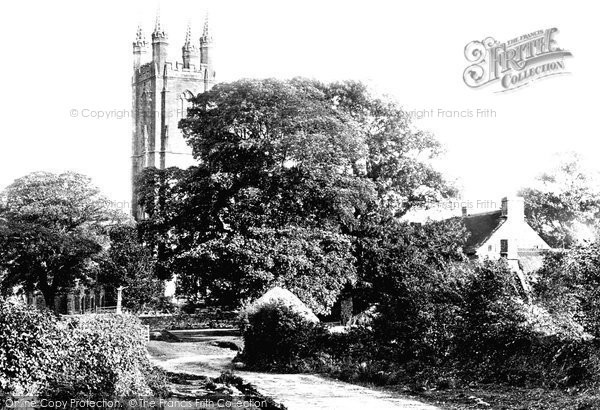
Widdecombe Church


Photo of Dartmoor, Widdecombe in the Moor 1907, ref. 5805

Reproduced courtesy of Francis Frith.


'Or from Buckland the walk may be prolonged 2 or 3 miles to Widecombe Church, known as the Cathedral of Dartmoor, a fine fane indeed for such a lonely situation, and much to large for its congregation. It is said to have been oraginally built by the tin miners as a thanks offering in the 15th century...

...The neighborhood [of Widdecombe-in-the-Moor] has a bad name for thunder-storms, and a notorious one in 1638 seriously damaged the tower, as may still be seen, and is recorded in some quaint lines by the villiage dominie, displayed on a board on the wall. Four of the congregation where killed and many injured by this catastrophe, which of course gave rise to grim legends of diabolical agency.'

Hope Moncrieff 1895

Monday, 31 May 2010

Dartmoor Pixie

'The appearance of the pixies of Dartmoor is said to resemble that of a bale or bundle of rags. In this shape they decoy children to their unreal pleasure. A woman, on the northern borders of the moor, was returning home late on a dark evening, accompanied by two children, and carrying a third in her arms, when, on arriving at her own door, she found one missing. Her neighbours, with lanthorns, immediately set out in quest of the lost child; whom they found sitting under a large oak-tree, well known to be a favourite haunt of the pixies. He declared that he had been led away by two large bundles of rags, which had remained with him until the lights appeared, when they immediately vanished.

The pixies of Dartmoor, notwithstanding their darker character, aided occasionally in household work. A washer-woman was one morning greatly surprised, on coming down-stairs, to find all her clothes neatly washed and folded. She watched the next evening, and observed a pixie in the act of performing this kind office for her: but she was ragged and mean in appearance, and Betty's gratitude was sufficiently great to- induce her to prepare a yellow petticoat and a red cap for the obliging pixie.'

Hunt 1903

Sunday, 30 May 2010

Dartmoor - Cranmere Pool

'Cranmere Pool is believed to be a place of punishment for unhappy spirits, who are frequently lo be heard wailing in the morasses which surround it.'

Hope 1893

Plymouth - Drakies Leat

'The source of the Plymouth leat is visited annually by the Mayor and Corporation, who there drink in water "to the pious memory of Sir Francis Drake," and then in wine, "May the descendants of him who brought us water never want wine." The legend runs that the inhabitants, or rather laundresses, being much inconvenienced from want of water, Sir Francis Drake called for his horse, and riding into Dartmoor, searched about until he had found a very fine spring, when he bewitched it with magical words, and, starting away at a gallop, the stream followed his horse's heels into the town.'

Hope 1893

Friday, 28 May 2010

Fairies and Pixies in Cornwall and Devon

'They are truly the fairies of " Midsummer Night's Dream." They haunt the most rural and romantic' spots, and they gather

"On hill, in dale, forest, or mead,
By paved fountain, or by rushy brook,
Or on the beached margent of the sea,
To dance their ringlets to the whistling wind."

No such fairies are ever met with on Dartmoor. A few, judging from Mrs Bray's tales, [c]may have been tempted into the lovely valley of the Tavy, but certainly they never crossed the Tamar. The darker shades in the character of the Cornish fairy almost dispose me to conclude that they belong to an older family than those of Devonshire.'

Hunt 1903

On the nature of Pixies

'The Piscy or Pixy of East Devon and Somersetshire is a different creature from his cousin of a similar name in Cornwall. The former is a mischievous, but in all respects a very harmless creation, who appears to live a rollicking life amidst the luxuriant scenes of those beautiful counties. The latter, the piskies of Cornwall, appear to have their wits sharpened by their necessities, and may be likened to the keen and cunning "Arab" boy of the London streets, as seen in contrast with the clever child who has been reared in every comfort of a well-regulated home.'

Hunt 1903

Fairie Distribution

'Between thirty and forty years since, ere yet the influences of our practical education had disturbed the poetical education of the people, every hill and valley, every tree, shrub, and flower was peopled with spiritual creations, deriving their characteristics from the physical peculiarities amidst which they were born. Extending over the whole district which was formerly known as Danmonium, [a] -- embracing not only Cornwall, but Devonshire, to the eastern edge of Dartmoor, -- we find a mythology, which varies but little in its main features. Beyond an imaginary line, drawn in a north-westerly direction from the mouth of the Teign to the rise of the Torridge, the curiously wild and distinguishing superstitions of the "Cornwallers" [b] fade away, and we have those which are common to Somersetshire and the more fertile counties of mid-England.'

Hunt 1903

The giant Ordulf

'THIS Tavistock Sampson is far removed from our fine old legendary giant; yet we perceive in the stories of Ordulph precisely the same process as that which has given immortality to Blunderbuss and others. In the church of the monastery of Tavistock, built by Orgar in 960, and consecrated by St Rumon, was buried Orgar, and also his son Edulf or Ordulph, to whom, by some writers, the foundation of the abbey is attributed Ordulph was a man of giant size, and possessing most remarkable strength. He once appeared before the gates of the city of Exeter in company with King Edward, and demanded admission. His demand was not immediately complied with. He tore away the bars of the portcullis with his hands--burst open the gates with his foot--rent the locks and bolts asunder--and broke down a considerable portion of the wall--walking into the city over the ruins, and occasioning great alarm amidst the inhabitants.

The king is said to have attributed this extraordinary feat of strength to the chieftain's having entered into a compact with the devil; and the people generally believed the king to be correct.

At Tavistock, it was the custom of Ordulph to stand with one foot on either side of the Tavy, which is about twenty feet wide, and having the wild beasts driven in from the Dartmoor forests, he would--with the seemingly insignificant blows of a small knife--strike their heads off into the stream. [a]

[a] William of Malmesbury tells us that both father and son were buried at Tavistock, which is thus described - Est in Domnonia caenobium monachorum, juxta Tau fiuvium, quod Tavistock vocator; quod per Ordgarum, comitem Domnoniensem, patrem Elffilda, gui fuit uxor regis Edgari, surgendi exordium, per Livinguns episcopum, cresendi accepit auspicium locus, amaenus opportunitate nemorum, captura copiosa piscum, Ecclesiae congruente fabriea, fluvialibus rivis per officinas monachorum decurrentibus, qui suo impetu effusi, quidquid invenerint superfium, portant in exitum." Quoted by Pedler in his "Episcopate of Cornwall."

Mrs Bray, in her "Traditions, Legends, Superstitions, and Sketches of Devonshire," says,--"But notwithstanding the superiority of his strength and stature, Ordulph died in the flower of his age. He gave orders to be buried at his abbey at Herton, in Dorsetshire; but was interred in or near the Abbey Church of Tavistock, where a mausoleum or tomb of vast dimensions was erected to his memory, which is represented to have been visited as a wonder. 'The thigh-bone of Ordulph is still preserved in Tavistock Church."'

Hunt 1903

Thursday, 27 May 2010

How Tom and Jack found tin, part 9

[cont.] '...Jack had a desire to go home to Dartmoor to see his mother, who had sent to tell him that the old giant Dart was near death. He started at once, on foot. Tom wished him to have Pengerswick's colt, but Jack preferred his legs. It would be too long a tale to tell the story of his travels. He killed serpents and wild beasts in the woods, and when he came to rivers, he had but to take off his coat, gather up the skirts of it with a string, and stretch out the body with a few sticks,--thus forming a cobble,--launch it on the water, and paddle himself across. He reached home. The old giant was at his last gasp. Jack made him give everything to his mother before he breathed his last. 'When he died, Jack carefully buried him. He then settled all matters for his mother, and returned to the West Country again....' [cont.]

Hunt 1903

Monday, 24 May 2010

Giants of Cornwall

'The giant stories, prefaced with the often-told tale of Gogmagog, are of a character peculiarly their own. They do not appear to resemble the giants described in Mr Campbell's "Popular Tales of the West Highlands;" but it must be admitted that there are some indications of a common origin between those of Cromarty and of Cornwall, In Mr Dasent 's translation of Asbjornsen, and Moe's collection of "Norse Tales," the giant is not like our native friends. May we venture to believe that the Cornish giant is a true Celt, or may he not belong to an earlier race? He was fond of home, and we have no record of his ever having passed beyond the wilds of Dartmoor. The giants of Lancashire, of Cheshire, and Shropshire have a family likeness, and are, no doubt, closely related; but if they are cousins to the Cornish giants, they are cousins far removed. Dr Latham, in his "Ethnology of the British Islands," says "Tradition, too, indicates the existence of an old march or debatable land; for south of Rugby begins the scene of the deeds of Guy, Earl of Warwick, the slayer of the dun cow." The large bone which is shown in Redcliff Church, Bristol, is the last indication of the dun cow in the south. As this marvellous cow moved within prescribed limits, so was it with the giants of old Cornwall.'

Hunt 1903